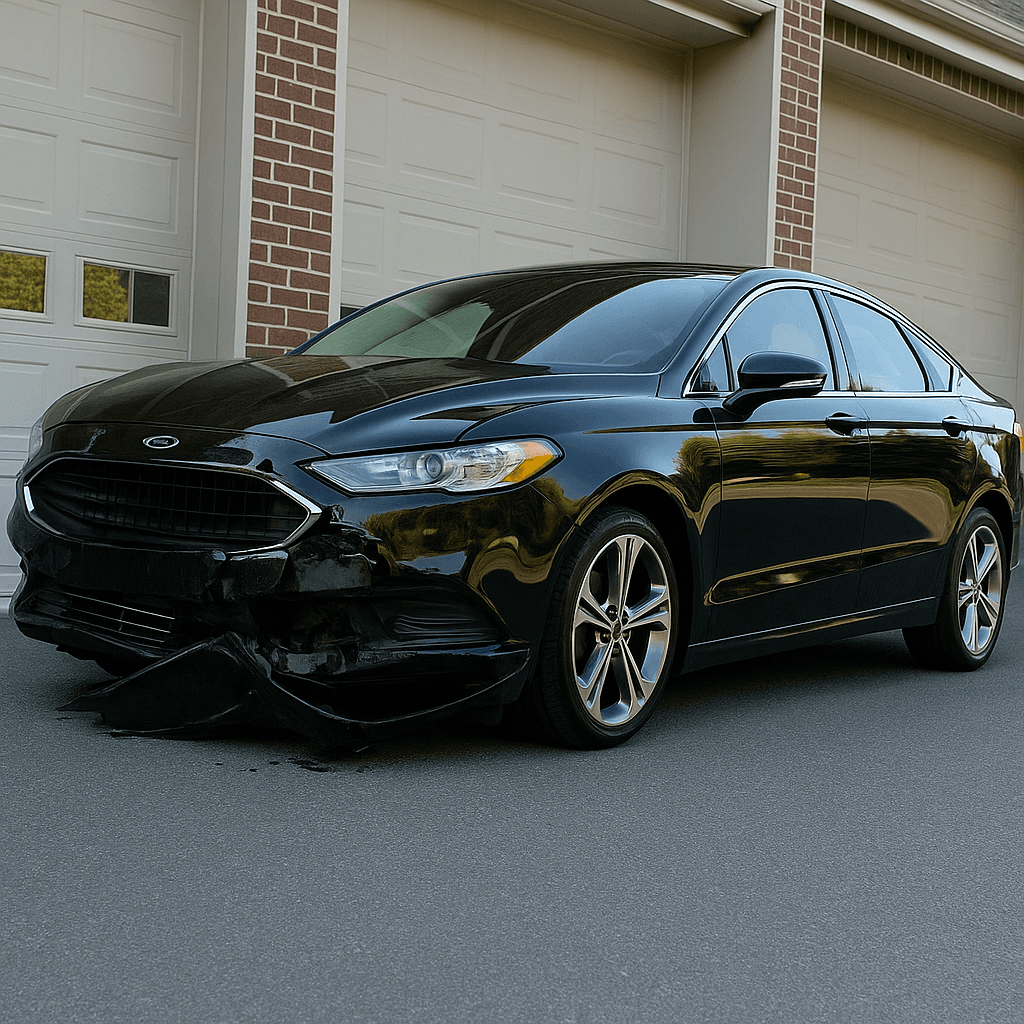
Your 2010 paid-off sedan may not need the same coverage it did when new — but dropping the wrong protection could cost you far more than the premium savings.
Why 15-Year-Old Vehicles Change the Coverage Calculation
A 15-year-old vehicle in average condition typically has an actual cash value between $2,000 and $5,000, depending on make, model, and mileage. If you're carrying a $500 or $1,000 deductible on collision coverage, a total loss claim would net you $1,000 to $4,000 after the deductible is subtracted. Meanwhile, collision coverage alone often costs $400–$800 per year for senior drivers, meaning you could recover your premium costs in just 2–4 years of claim-free driving.
This math shifts dramatically from when the vehicle was newer. A $25,000 car with a $500 deductible could yield a $24,500 total loss payout, justifying higher premiums. But as actual cash value drops below $5,000, the maximum possible return shrinks while premiums often decline only modestly — creating a coverage-to-value mismatch that disproportionately affects senior drivers on fixed incomes.
The decision isn't simply "drop everything but liability." Comprehensive coverage, which protects against theft, vandalism, fire, weather damage, and animal strikes, typically costs $150–$300 annually — often half the cost of collision. A hailstorm, deer strike, or catalytic converter theft could easily exceed that annual premium, making comprehensive coverage often worth retaining even when collision coverage no longer pencils out.
State-Specific Requirements and How They Affect Older Vehicles
Your state's minimum liability requirements don't change based on your vehicle's age — a 2010 Honda Accord faces the same mandated coverage floors as a 2024 model. Most states require liability coverage in the range of 25/50/25 ($25,000 bodily injury per person, $50,000 per accident, $25,000 property damage), though some states mandate higher minimums and others allow drivers to post bonds or self-insure.
However, 12 states require Personal Injury Protection (PIP) or Medical Payments coverage regardless of vehicle age, including Florida, Hawaii, Kansas, Kentucky, Massachusetts, Michigan, Minnesota, New Jersey, New York, North Dakota, Oregon, Pennsylvania, and Utah. For senior drivers on Medicare, this creates an important coverage overlap question: Medicare Part B covers injuries from auto accidents, but it applies as secondary coverage if you carry PIP or MedPay. If you drop these coverages where optional, Medicare becomes primary — but you'll face its deductibles and co-insurance requirements.
Some states offer mature driver course discounts that are mandated by law, not carrier discretion. In states like Florida, Illinois, and New York, insurers must offer discounts ranging from 5% to 15% for drivers who complete state-approved defensive driving courses. These discounts apply to your total premium, not just specific coverages, meaning they reduce costs on both your aging vehicle and any newer cars on your policy. The discount often renews every three years with course recertification, and completion can be done online in most states within 4–6 hours.
Compare rates from carriers that specialize in senior drivers
Mature driver discounts, low-mileage rates, and coverage reviews — see what you're actually eligible for.
Get Your Free Quote✓ Mature Driver Discounts✓ No Obligation✓ Licensed Carriers✓ All 50 States
Collision vs. Comprehensive: Which to Keep on a 15-Year-Old Vehicle
Collision coverage pays for damage to your vehicle when you hit another car or object, regardless of fault. Comprehensive coverage pays for nearly everything else: theft, weather, fire, falling objects, and animal strikes. For a 15-year-old vehicle, comprehensive coverage delivers better value in most scenarios because the risks it covers are largely outside your control and can easily exceed the annual premium.
A catalytic converter theft on a 2009 Toyota Prius costs $2,000–$3,500 to repair. A deer strike causing front-end damage averages $4,000–$6,000 in repairs. Hail damage can total an older vehicle even when the mechanical systems remain sound. These incidents happen regardless of your driving skill or clean record — and for senior drivers who may have gone decades without an at-fault accident, collision coverage is protecting against a risk they've historically avoided.
The breakeven analysis is straightforward: calculate your vehicle's actual cash value (use NADA or Kelley Blue Book for a reasonable estimate), subtract your deductible, and compare that maximum payout to your annual collision premium. If you're paying $600 per year for collision coverage on a vehicle worth $3,500 with a $500 deductible, you'd net $3,000 in a total loss — five years of premiums. Most financial advisors suggest dropping collision coverage when the annual premium exceeds 10% of the vehicle's value.
Comprehensive coverage should be evaluated separately. Even if your vehicle is worth only $3,000, a $200 annual comprehensive premium with a $250 deductible means a single covered incident could return more than a year's premiums. Geographic risk matters here: if you live in an area with high theft rates, severe weather, or heavy deer populations, comprehensive coverage remains cost-justified longer than collision.
Liability Coverage Limits: Why Older Vehicles May Need Higher Limits
Many senior drivers mistakenly believe that driving an older, paid-off vehicle justifies carrying only state minimum liability coverage. This reverses the actual risk calculus. Liability coverage protects your assets when you cause injury or property damage to others — it has nothing to do with your vehicle's value and everything to do with your net worth.
If you own a home with equity, have retirement savings, or receive pension or Social Security income, you're a higher-value target in a lawsuit than a 25-year-old renter with no assets. State minimum liability limits in many states are $25,000 per person for bodily injury — an amount that wouldn't cover a single week in intensive care. If you cause a serious accident and the damages exceed your liability limits, the injured party can pursue your personal assets through a civil judgment.
Most insurance professionals recommend liability limits of at least 100/300/100 for drivers with moderate assets, and 250/500/100 or higher for those with home equity exceeding $200,000 or retirement accounts above $500,000. The premium difference between state minimums and substantially higher limits is often smaller than drivers expect — typically $200–$400 annually — because liability claims correlate more with driver behavior and mileage than with coverage limits purchased.
For senior drivers who no longer commute and drive fewer than 7,500 miles annually, collision with your own vehicle becomes statistically less likely, but your liability exposure per mile driven doesn't decrease. This makes higher liability limits on an older vehicle a more rational choice than collision coverage in many cases.
Medical Payments and PIP: How They Work Alongside Medicare
Medical Payments coverage (MedPay) and Personal Injury Protection (PIP) both pay for medical expenses after an accident, regardless of fault. The distinction matters for senior drivers on Medicare: MedPay is typically secondary to health insurance, while PIP is often primary and must pay before Medicare in no-fault states.
Medicare Part B covers injuries from auto accidents, but it applies as secondary coverage if you have PIP or MedPay. This means your auto policy pays first up to its limits, then Medicare covers remaining eligible expenses. If you carry no medical coverage on your auto policy, Medicare becomes primary — you'll face your Medicare deductible ($240 in 2024) and 20% co-insurance on Part B services, which can add up quickly after a serious accident.
In the 12 states requiring PIP, you typically cannot opt out even if you have Medicare. PIP limits vary by state: Michigan requires unlimited medical coverage (though recent reforms allow drivers to opt for lower limits if they have qualifying health insurance), while Florida requires only $10,000. Senior drivers in PIP states should verify whether their PIP limit is sufficient given Medicare's cost-sharing requirements, or if purchasing additional MedPay makes sense.
In states where MedPay is optional, the coverage is inexpensive — often $30–$80 per year for $5,000 in coverage — and can eliminate out-of-pocket costs that Medicare doesn't cover, including ambulance bills, which Medicare covers at only 80% after the Part B deductible. For senior drivers on fixed incomes, a $1,500 ambulance bill with 20% co-insurance ($300 out-of-pocket) can be significant, making low-limit MedPay coverage worth considering even with Medicare.
Discount Opportunities Specific to Senior Drivers with Older Vehicles
Mature driver course discounts are the most underutilized discount available to senior drivers. State-approved defensive driving courses — available online through AARP, AAA, and other providers — typically cost $20–$30 and take 4–6 hours to complete. In states with mandated discounts, the savings range from 5% to 15% of your total premium, which translates to $75–$300 annually on a $1,500 policy. The discount renews every three years in most states, making the return on investment substantial.
Low-mileage discounts become especially valuable for retirees who no longer commute. Most carriers offer reduced rates for drivers logging fewer than 7,500 miles annually, with discounts ranging from 5% to 20%. Some insurers now offer pay-per-mile policies where you pay a base rate plus a per-mile charge — these can cut premiums by 30%–40% for drivers averaging under 5,000 miles per year. Odometer verification is typically required annually, either through photo submission or during policy renewal.
Paid-in-full discounts of 5%–10% are available at most carriers if you pay your annual or six-month premium upfront rather than monthly. For a senior driver on a fixed income, this requires planning but can save $75–$150 annually. Bundling your auto policy with homeowners or renters insurance typically yields 10%–25% on the auto portion, and many carriers offer additional discounts for long-term customers (often called loyalty discounts) that increase after 3, 5, and 10 years with the same insurer.
Paperless and automatic payment discounts are small individually — usually $2–$5 per month each — but they stack with other discounts and require no ongoing effort once enrolled. For a senior driver who has reduced collision coverage, maximized their mature driver and low-mileage discounts, and set up autopay, the combined savings can approach 30%–40% compared to a baseline policy with no discounts applied.
When to Reconsider Coverage as Your Vehicle Ages Further
The coverage decision isn't static. As your vehicle ages from 15 to 18 to 20 years old, its actual cash value continues to decline while repair costs for mechanical failures typically increase. At some point — usually when actual cash value drops below $2,000 or annual collision premium exceeds the vehicle's value minus deductible — even comprehensive coverage may no longer be cost-justified.
Reassess your coverage annually at renewal, not just when your rate changes. Pull a current valuation from NADA or Kelley Blue Book in "fair" condition unless your vehicle is exceptionally well-maintained. Compare your comprehensive and collision premiums separately to the vehicle's value minus your deductible. If comprehensive coverage costs $180 annually and your vehicle is worth $1,800 with a $500 deductible, you'd net only $1,300 in a total loss — about seven years of premium.
Life changes should also trigger coverage reviews. If you move from a high-theft urban area to a rural community with lower crime rates, comprehensive coverage becomes less valuable. If you reduce your driving further — many seniors in their mid-70s drive 30%–40% fewer miles than they did at 65 — low-mileage or pay-per-mile policies may offer better value. If you're diagnosed with a condition that may limit your future driving years, retaining collision coverage on a vehicle you may not drive much longer carries diminishing returns.
The goal isn't to achieve the absolute lowest premium, but to carry coverage that protects against financial risks you couldn't comfortably absorb. For most senior drivers on fixed incomes, a $5,000 unexpected expense would be significant, but a $1,500 loss, while unpleasant, wouldn't threaten financial security. That threshold — the point where a loss would require dipping into savings versus merely being inconvenient — should guide your coverage decisions more than the vehicle's age alone.





