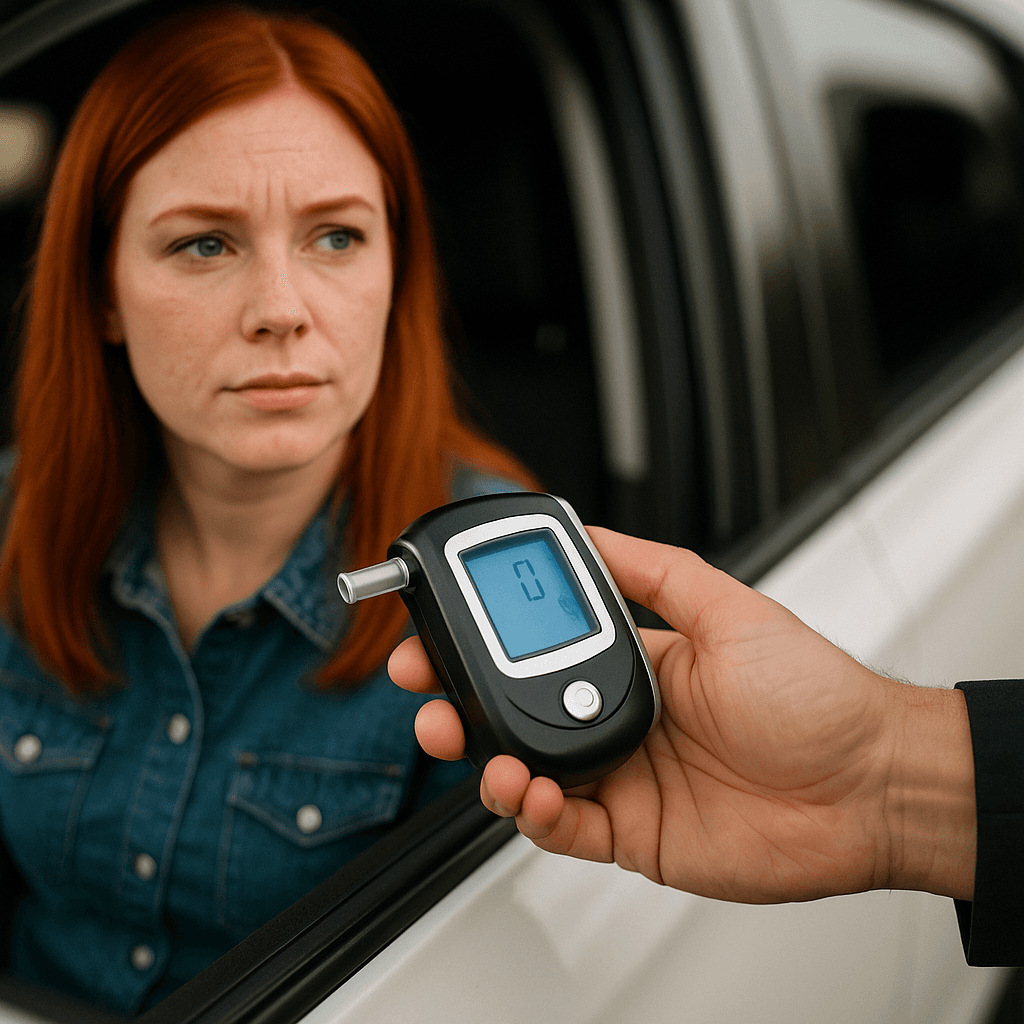
If you've received a DUI or serious violation after decades of clean driving, understanding whether Florida requires an FR-44 or SR-22 — and what that means for your premium — determines whether you'll pay $200/mo or $450/mo for the same liability coverage.
Why Florida's FR-44 Costs Senior Drivers Far More Than an SR-22
Florida is one of only two states that require an FR-44 certificate instead of the more common SR-22 for DUI and certain serious violations. The critical difference for your premium: an FR-44 mandates $100,000/$300,000 bodily injury liability and $50,000 property damage liability, while an SR-22 in most states requires only your state's minimum limits. If you're 68 and facing your first DUI after 50 years of clean driving, this distinction isn't academic — it typically adds $150 to $250 per month to your premium compared to what the same violation would cost in an SR-22 state.
The higher liability requirements mean carriers are covering more risk, and senior drivers already face age-based rate increases that accelerate after 70. A Florida driver age 72 with an FR-44 filing after a DUI can expect to pay $400 to $550 per month for the minimum required coverage, compared to $180 to $280 per month for identical coverage without the violation. The FR-44 itself is just a certificate proving you carry the required coverage — it's the doubled liability limits that drive the cost.
Most insurance comparison tools don't separate FR-44 and SR-22 pricing clearly, which leaves senior drivers comparing quotes that may not even satisfy Florida's requirement. Before you accept any quote, confirm the policy includes 100/300/50 liability limits and that the insurer will file the FR-44 certificate with the Florida Department of Highway Safety and Motor Vehicles on your behalf.
What Triggers an FR-44 Requirement for Florida Drivers
Florida requires an FR-44 filing for DUI convictions, refusal to submit to a breathalyzer test, and driving with a suspended license due to alcohol-related offenses. If you're convicted of DUI at age 70 after a lifetime without violations, the court doesn't consider your clean history when imposing the FR-44 requirement — the mandate is automatic and applies uniformly regardless of age or prior record.
The filing requirement typically lasts three years from the date of reinstatement, not from the date of conviction. If your license is suspended for 12 months, then you must maintain the FR-44 for three full years after reinstatement, meaning your total elevated-premium period runs four years. Missing a single month of coverage during that period resets the three-year clock entirely.
Senior drivers often assume a first-time offense will result in leniency or reduced requirements. Florida law makes no such accommodation. The financial impact is immediate: your current insurer will likely non-renew your policy at the end of your term, forcing you into the high-risk market where fewer carriers compete for senior driver business and premiums reflect both the violation and age-based actuarial factors.
Compare rates from carriers that specialize in senior drivers
Mature driver discounts, low-mileage rates, and coverage reviews — see what you're actually eligible for.
Get Your Free Quote✓ Mature Driver Discounts✓ No Obligation✓ Licensed Carriers✓ All 50 States
How SR-22 and FR-44 Filing Actually Works in Practice
Both SR-22 and FR-44 certificates are proof-of-insurance forms your carrier files electronically with your state's motor vehicle department. The certificate itself costs $15 to $50 as a one-time filing fee, but that nominal cost obscures the real expense: you're now classified as a high-risk driver, which moves you into a different underwriting tier with substantially higher premiums.
Your insurer must notify the state immediately if your policy lapses, is cancelled, or if you reduce coverage below the required limits. For senior drivers on fixed incomes, this creates a dangerous failure mode: if you miss a payment by even a few days and your policy cancels, the state receives automatic notice and your license is re-suspended. Reinstatement then requires paying reinstatement fees, obtaining new FR-44 coverage, and restarting the three-year filing period from zero.
Many carriers that offer standard coverage to senior drivers won't write FR-44 policies at all, which narrows your options to high-risk specialists. These insurers typically require six-month prepayment or monthly payments via automatic bank draft — cash and check payments are often not accepted because the lapse risk is too high. If you've been with the same insurer for 20 years and suddenly need an FR-44, prepare to shop a completely different market.
Actual Premium Differences: Florida FR-44 vs. Typical SR-22 Costs
A 67-year-old Florida driver with a clean record typically pays $85 to $140 per month for 100/300/50 liability coverage. After a DUI requiring an FR-44, that same driver faces premiums of $380 to $520 per month with high-risk carriers — an increase of 300% to 450%. In contrast, a driver in Georgia (an SR-22 state) with identical age and violation history pays $220 to $340 per month, because Georgia's minimum liability limits are significantly lower and SR-22 doesn't mandate the elevated coverage Florida requires.
The rate difference compounds over the three-year filing period. A Florida senior driver will pay approximately $13,700 to $18,700 in total premiums over three years for FR-44 compliance, compared to $7,900 to $12,200 for SR-22 in a minimum-limits state. This $5,800 to $6,500 cost differential exists entirely because of Florida's doubled liability requirement — you're buying more coverage whether you want it or not.
Some senior drivers consider dropping comprehensive and collision coverage on paid-off vehicles to offset the liability cost increase. This can save $60 to $120 per month if your vehicle is worth less than $5,000, but it leaves you paying out-of-pocket for any damage to your own car. For a 12-year-old sedan valued at $3,200, dropping collision makes financial sense. For a 6-year-old vehicle worth $12,000, you're gambling that $4,000 saved over three years justifies total loss risk.
State-Specific Considerations Florida Senior Drivers Must Know
Florida does not mandate mature driver course discounts for FR-44 policyholders the way it does for standard policies, and most high-risk insurers don't offer them voluntarily. The typical 5% to 10% discount available to drivers 55+ who complete a state-approved defensive driving course evaporates once you enter the FR-44 market. If you completed the course before your violation, that discount is already factored into your pre-violation rate — it won't carry forward.
Florida's Personal Injury Protection (PIP) requirement adds another $15 to $35 per month to your premium, and this coverage overlaps partially with Medicare for drivers 65 and older. PIP pays first regardless of fault, but Medicare covers most medical expenses for senior drivers after the PIP limit is exhausted. You cannot waive PIP in Florida even if you have Medicare, which means you're paying for somewhat duplicative coverage by state mandate.
The three-year FR-44 period begins only after full license reinstatement, which requires paying a $275 to $500 reinstatement fee depending on your violation specifics, completing DUI school (typically $275 to $350), and sometimes installing an ignition interlock device for six months to a year at $70 to $100 per month. These upfront costs total $1,500 to $2,500 before you even purchase your first month of FR-44 insurance, creating a significant cash flow burden for senior drivers on retirement income.
How to Find FR-44 Coverage That Fits a Retirement Budget
Standard comparison tools often exclude high-risk insurers, so you'll need to contact FR-44 specialists directly. Progressive, National General, and The General write FR-44 policies in Florida and will quote senior drivers, though rates vary widely based on your specific age, violation details, and ZIP code. Requesting quotes from at least three carriers is essential — the difference between the highest and lowest quote for identical coverage regularly exceeds $100 per month.
Some insurers offer pay-per-mile programs that can reduce premiums if you drive fewer than 7,500 miles per year, which many retired drivers do. Metromile and Nationwide's SmartMiles program aren't available for FR-44 policies in most cases, but a few regional carriers offer mileage-based discounts even in the high-risk market. If you drive only 4,000 miles annually, ask every insurer you contact whether mileage affects your rate — occasional success here saves $40 to $70 per month.
Bundling homeowners or renters insurance won't help much because most high-risk auto insurers don't write property coverage, and your existing property insurer likely won't write your FR-44 auto policy. The multi-policy discount that saved you 15% to 20% on standard coverage disappears entirely. Plan for your auto and property insurance to be with separate carriers for the entire FR-44 period, and budget accordingly.
What Happens After Your Three-Year FR-44 Period Ends
Once you've maintained continuous FR-44 coverage for three years without a lapse, the filing requirement ends and you can return to the standard insurance market. Your rates won't immediately drop to pre-violation levels — the DUI remains on your driving record for 75 years in Florida, and most insurers surcharge for it for five to seven years. However, you'll no longer be required to carry 100/300/50 limits, which means you can reduce to Florida's standard 10/20/10 minimums if you choose.
Returning to a standard-market insurer typically reduces your premium by 40% to 60% compared to your FR-44 rate, even with the violation surcharge still applied. A senior driver paying $430 per month in year three of FR-44 coverage might pay $170 to $220 per month in year four with a standard insurer at minimum limits, or $240 to $290 per month if maintaining the higher 100/300/50 limits voluntarily. Many financial advisors recommend keeping the higher limits even after the mandate ends if you have significant retirement assets to protect from lawsuit judgments.
Shop aggressively when your FR-44 period ends. Your high-risk insurer will allow you to drop the filing but will rarely reclassify you to standard rates automatically — they'll keep charging high-risk premiums as long as you stay. Switching carriers the month after your three-year requirement ends typically saves $120 to $180 per month compared to simply continuing your existing policy.