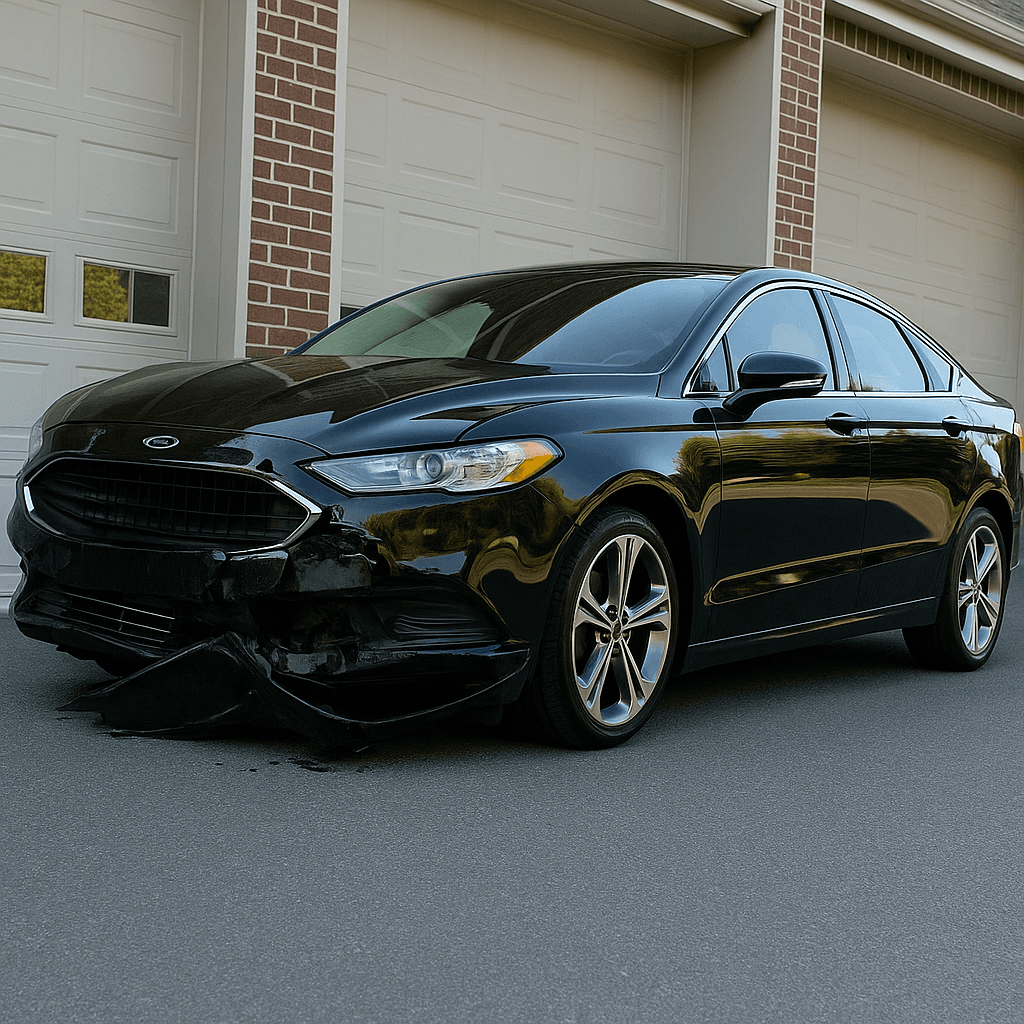
You've owned your 2015 sedan outright for years, and you're now paying $140/month for full coverage on a car worth $8,000. Here's how to calculate whether you're spending more on collision and comprehensive premiums than you'd ever collect in a claim.
The Coverage Question You Face After Payoff
Your vehicle is paid off, you're driving 6,000 miles per year instead of the 15,000 you drove during your working years, and your insurance bill hasn't dropped proportionally. You're now facing the question most senior drivers encounter: does full coverage still make financial sense, or are you paying for protection that costs more than the asset you're protecting?
The standard industry advice — "drop full coverage when your car is worth less than 10 times your premium" — oversimplifies the calculation for drivers on fixed retirement income. That rule ignores your deductible, your expected ownership timeline, and the opportunity cost of premiums that could be directed to other retirement priorities. A 68-year-old driver paying $95/month for collision and comprehensive coverage on a vehicle worth $7,500 needs a different framework.
The financial reality: collision and comprehensive premiums for senior drivers typically range from $70 to $150 per month depending on the vehicle's age, value, and the driver's state. Over a three-year ownership period, that's $2,520 to $5,400 in premiums. If your vehicle is worth $8,000 today and depreciating, and your deductible is $1,000, the maximum you could collect in a total-loss claim is $7,000 — and that's only if the loss happens tomorrow, not two years from now when the car is worth $6,000.
The Break-Even Calculation for Your Current Vehicle
Start with your vehicle's current market value, which you can verify using Kelley Blue Book or NADA guides for your specific year, make, model, and condition. Subtract your collision deductible (typically $500 to $1,000) to determine your maximum potential claim payout today. This is the ceiling on what you could recover, and it declines every year as your vehicle depreciates.
Next, isolate your annual cost for collision and comprehensive coverage alone. Most insurers don't break this out on your declarations page, so call and request the specific premium amounts for these two coverages separate from liability, medical payments, and uninsured motorist coverage. For a 70-year-old driver in a state like Ohio or Pennsylvania, collision typically costs $400 to $800 annually, and comprehensive adds another $200 to $400, depending on the vehicle's value and the driver's ZIP code.
Multiply that combined annual premium by the number of years you expect to keep the vehicle. If you're paying $1,100 per year for collision and comprehensive combined, and you plan to drive this car for another four years, you'll spend $4,400 in premiums. If your car is worth $7,000 today with a $1,000 deductible, your maximum claim is $6,000 right now — but in two years, when the car is worth $5,500, your maximum claim drops to $4,500. The break-even analysis shows you're likely to spend more protecting the vehicle than you could ever recover, especially if you avoid accidents.
This calculation changes dramatically if you have a history of at-fault accidents or comprehensive claims, or if you live in an area with high rates of vehicle theft or weather damage. A driver with three claims in the past five years has a different risk profile than a driver with a 20-year clean record. Your personal claim history matters more than generic industry statistics when deciding whether collision and comprehensive coverage justify their cost.
Compare rates from carriers that specialize in senior drivers
Mature driver discounts, low-mileage rates, and coverage reviews — see what you're actually eligible for.
Get Your Free Quote✓ Mature Driver Discounts✓ No Obligation✓ Licensed Carriers✓ All 50 States
What Minimum Coverage Actually Means in Your State
"Minimum coverage" is not a universal standard — it refers to your state's mandatory liability limits, and those vary significantly. In California, minimum liability is 15/30/5 ($15,000 per person for bodily injury, $30,000 per accident, $5,000 for property damage). In Alaska, it's 50/100/25. Many senior drivers assume minimum coverage is adequate because they've been told it satisfies the legal requirement, but those limits often fall short of protecting retirement assets in a serious accident.
A 72-year-old driver with $400,000 in retirement savings and a paid-off home is underinsured with 25/50/25 liability limits. If you cause an accident that injures another driver requiring $80,000 in medical treatment, your policy pays the first $25,000, and you're personally liable for the remaining $55,000. Plaintiff attorneys specifically target defendants with visible assets — and property records, vehicle registrations, and financial disclosures make retirees identifiable. Increasing liability limits from 25/50/25 to 100/300/100 typically adds $15 to $30 per month in most states, a fraction of the cost of collision coverage on an aging vehicle.
Minimum coverage does not include collision or comprehensive, so any damage to your own vehicle is your responsibility regardless of fault in a single-vehicle accident. It also excludes medical payments coverage and, in some states, uninsured motorist coverage unless you specifically add it. If you're considering dropping collision and comprehensive to reduce costs, the strategy that preserves your financial security is to redirect those savings into higher liability limits, not to pocket the difference while remaining underinsured for the liabilities that could actually threaten your retirement assets.
State-Specific Programs That Change the Calculation
Several states offer mature driver course discounts that directly reduce your premium across all coverage types, including collision and comprehensive. In New York, completing an approved defensive driving course mandates a 10% discount for three years. In Florida, the same course requirement yields approximately 10% to 15% depending on the carrier. In California, mature driver course discounts are voluntary but widely offered in the 5% to 15% range. These discounts apply to your total premium, so if you're paying $1,400 annually, a 10% mature driver discount saves you $140 per year — $420 over three years.
Some states also provide low-mileage programs specifically designed for drivers who no longer commute. In Pennsylvania, drivers aged 65 and older who drive fewer than 6,500 miles annually may qualify for reduced rates through specific insurers. In Illinois, telematics programs that verify actual mileage can reduce premiums by 10% to 30% for drivers logging under 7,000 miles per year. If you've dropped from 14,000 miles annually during your working years to 5,500 miles in retirement, and your insurer hasn't adjusted your rate to reflect that reduction, you're subsidizing higher-mileage drivers.
Medical payments coverage becomes strategically important in states without personal injury protection (PIP) mandates, particularly for senior drivers with Medicare. Medicare covers accident-related injuries, but it doesn't cover your passengers, and it may involve cost-sharing that medical payments coverage can offset. In Texas, Georgia, and many other non-PIP states, adding $5,000 in medical payments coverage costs $50 to $100 annually and coordinates with Medicare to cover deductibles and copays for accident-related treatment. This is a higher-value coverage addition than collision on a low-value vehicle for many senior drivers.
When Full Coverage Still Makes Financial Sense
If your vehicle is worth more than $15,000 and you don't have liquid savings to replace it out-of-pocket after a total loss, full coverage remains justified regardless of your age. A 2020 midsize sedan worth $18,000 is still a significant asset, and collision and comprehensive premiums of $1,200 annually represent reasonable protection for an asset you depend on for medical appointments, errands, and maintaining independence.
Full coverage also makes sense if you have a loan or lease, as lenders require it to protect their collateral interest. Some senior drivers who trade in paid-off vehicles for newer models with better safety features find themselves with a small loan balance — typically $8,000 to $12,000 — and collision and comprehensive coverage is non-negotiable until that balance is satisfied. If you're financing any portion of a vehicle purchase, the coverage decision is made for you.
Drivers with a history of at-fault accidents or comprehensive claims should weigh their personal risk profile against the vehicle's value. If you've filed two collision claims in the past four years, your likelihood of a future claim is actuarially higher than a driver with a clean record, and collision coverage may be cost-justified even on a vehicle worth $9,000. Conversely, a driver with a 25-year claim-free record is statistically unlikely to file a collision claim, making the premium a poor value on a vehicle worth under $10,000.
Finally, if you live in an area with high rates of vehicle theft, vandalism, or weather-related damage — such as hail-prone regions of Texas or Colorado, or high-theft urban areas — comprehensive coverage specifically protects against non-collision losses. Comprehensive premiums are typically lower than collision premiums, and in some cases it makes sense to drop collision while retaining comprehensive if your primary risk is theft or weather damage rather than at-fault accidents.
How to Transition Coverage Without Leaving Gaps
If your calculation shows that dropping collision and comprehensive makes financial sense, the transition must be timed correctly to avoid coverage gaps and to redirect savings into higher liability limits. Contact your insurer at least 15 days before your next renewal date and request a quote for liability-only coverage with increased limits. Do not cancel collision and comprehensive mid-term unless you're simultaneously increasing liability limits — the goal is to reduce total cost while improving protection where it matters most.
Request quotes for 100/300/100 liability limits and compare the total premium to your current full-coverage cost. In many cases, dropping collision and comprehensive on a vehicle worth $7,000 while increasing liability from 50/100/50 to 100/300/100 results in a net monthly savings of $60 to $90. That's $720 to $1,080 annually that remains in your budget while improving your protection against the liabilities that actually threaten retirement assets.
Consider your state's specific senior driver programs before making the change. If your state mandates or widely offers mature driver course discounts, complete the course before requesting new quotes — the discount applies to your revised coverage and further reduces your premium. In states like New York or Florida where the discount is significant, the combination of dropping unnecessary collision coverage, increasing liability limits, and applying a mature driver discount can reduce total annual premiums by 25% to 35% compared to a full-coverage policy without discounts.
Document the coverage change in writing and confirm that your new declarations page reflects the increased liability limits and any applicable discounts. Many senior drivers are surprised to find that discounts they qualified for — mature driver courses, low-mileage programs, defensive driving credits — were not applied at renewal. Verify every line item on your new policy, and if promised discounts are missing, request a corrected declarations page and a refund for any overcharged premium before the change takes effect.